It always knows exactly where it stands.
Any flow that must end in a correct, rule-compliant record is a fit. The active path below is not a metaphor. It is the data structure.
One engine. Any contract.
Every case on this page is the same machinery wearing a different contract: typed fields, guards, evidence, conclusions, gates. If your workflow can be written down as rules, PRISM can hold an agent to them.
The booking agent.
Appointments, tables, rooms, services. Running with real businesses on web, Telegram and WhatsApp today. It has its own page, with the adversarial session replay to prove the point.
See the booking agent →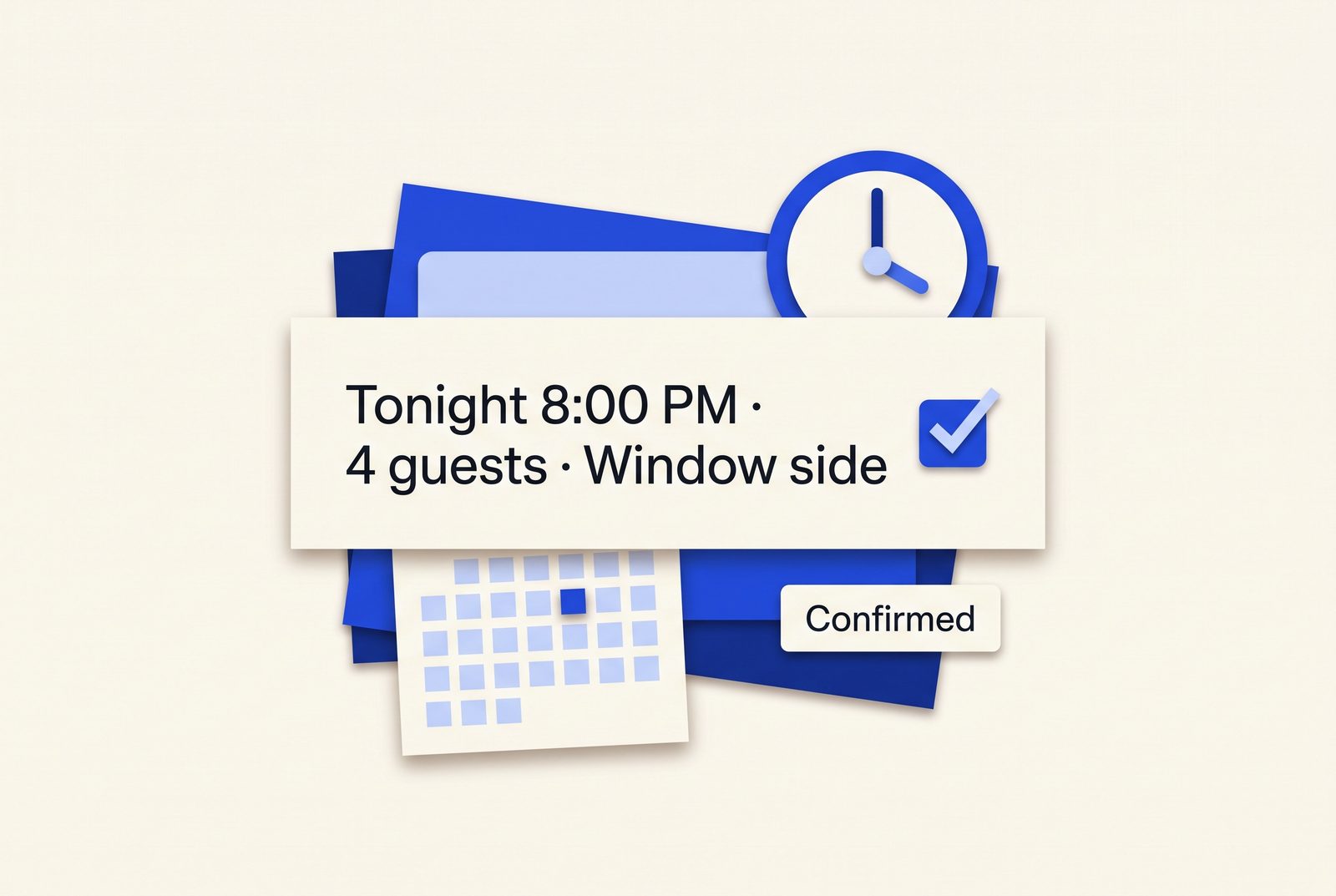
 Kills: fraudulent payouts, incomplete files
Insurance claim intake.
Claim types branch into their own document requirements. Amount thresholds trigger extra evidence via numeric guards. The adjudication conclusion stays locked until the key document actually exists.
A payout that structurally cannot happen before the receipt uploads. Kills: confidently wrong ticket closures
Support diagnosis.
Symptoms are data fields. Diagnostics are evidence tools: the log pull, the line test, the ping. The diagnosis is a conclusion that requires them, and unresolvable cases escalate with the evidence already attached.
No verdict exists anywhere until the diagnostic actually ran. Kills: eligibility errors, consent gaps
Patient and trial intake.
Eligibility criteria as guarded fields: age windows, condition branches. Consent documents as evidence. The eligibility determination is locked behind both, and the audit trail comes for free.
A compliance-grade record produced by a conversation. Kills: mispriced quotes, duplicate orders
Sales configuration and ordering.
Options with guards, prices with validated ranges, a verified profile so every order is summarized and confirmed, and an idempotent commit so retries never double-book.
Immune to the entire "sell it for $1" class of manipulation. Kills: skipped containment steps, thin postmortems
Incident response.
Severity thresholds activate additional mandatory steps. Containment actions are evidence fields. The closing report is a conclusion that requires them, and the event log doubles as the incident timeline.
The timeline writes itself while the incident is handled. Kills: missing documents, restart loops
Loans, permits, applications.
Deep conditional document requirements: self-employed versus salaried, joint versus single. Mid-application corrections prune exactly what died and keep everything that survived. Nothing submits while anything mandatory is missing.
Change your answer at step 12. Keep nine answers. Restart nothing.Your workflow is not on this page?
The page is short. The space is not. If it must end in a correct record, describe it to us and we will show you the contract we would write for it.